Lessons from Across the Fence…

… or {more accurately} through the fence.

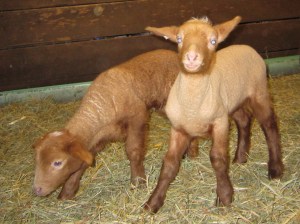
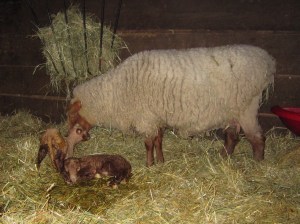
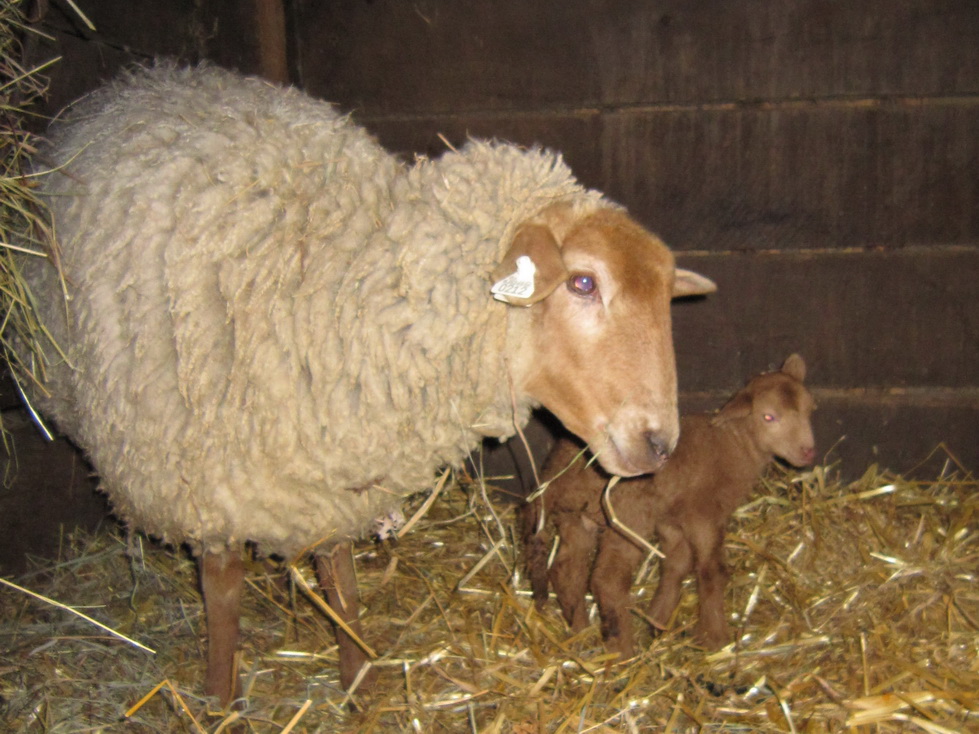
We brought Camille and her 2-week old ram lamb home in May 2009.  After weaning, we sold Camille’s lamb “Cameron” to Christine E. in NJ to be the herdsire for her flock.  He produced beautiful offspring, but in 2012 Christine decided not to breed her sheep.  It turns out Cameron had other ideas…

~~~~~~

Here’s Christine’s story:

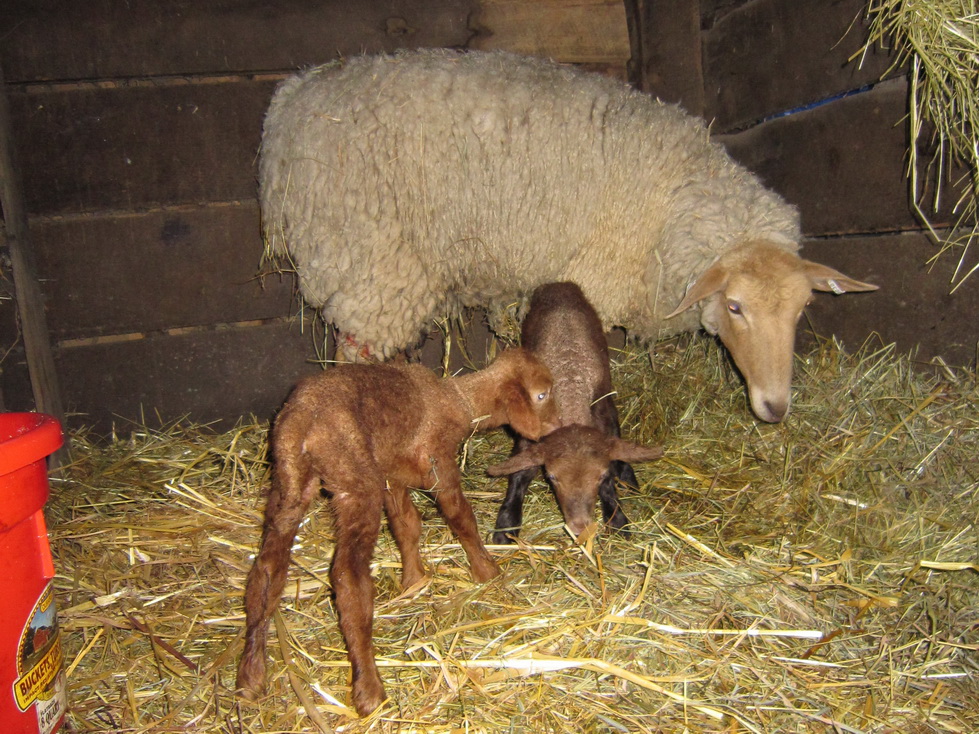
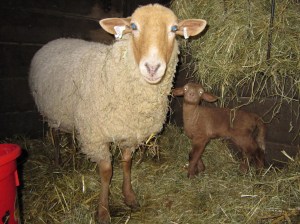
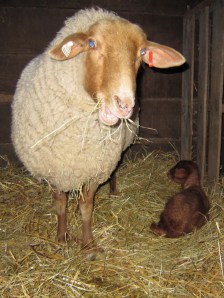
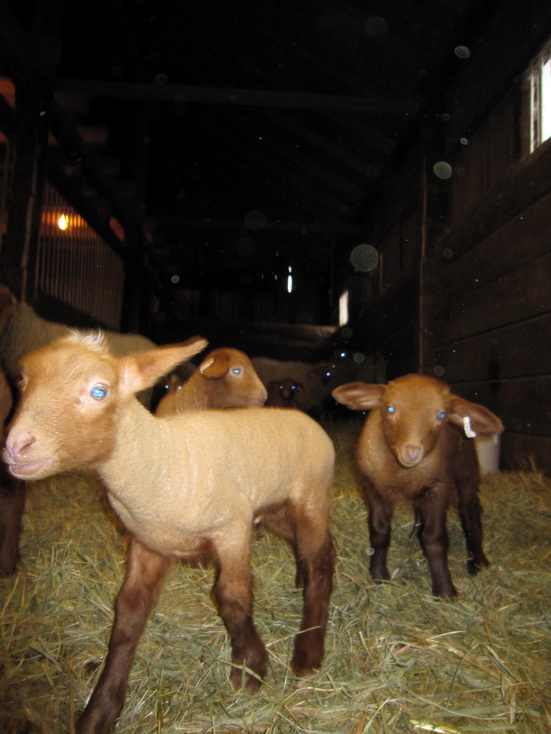
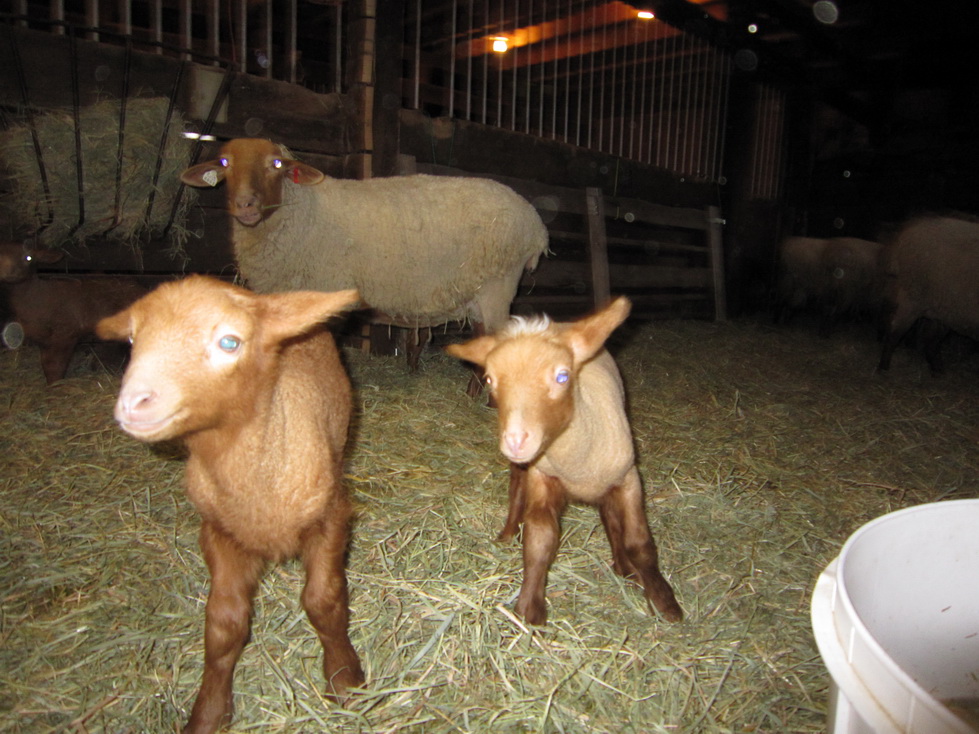
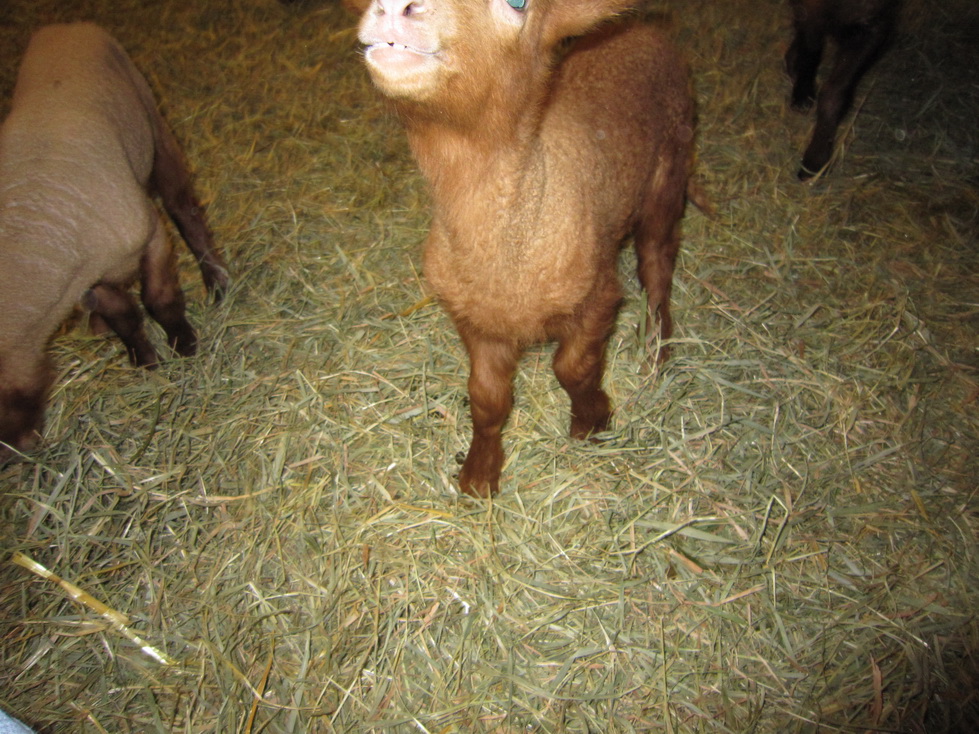
We had Cameron and 13 ewes.  We decided not to breed, so in May 2012 we separated Cameron from the ewes in a connecting pasture separated by 4×4 mesh sheep fence.  On January 16, 2013, I noticed that one of the two-year old ewes was bagging up.  We were not set-up for lambing (had disassembled lambing pens), so we put her in my horse trailer.  Within 48 hours, she delivered 2 lambs.
After that, I got down on my knees to study all of the ewes as they walked around in the pasture.  The ewes were of course very woolly, so it was difficult to tell for sure as they all looked fat and the only way to really get an idea if they were pregnant was to see if they were bagging up.  As they are on 5 acres, it was impossible to catch each one to get a hands-on check of them.
I noticed another ewe bagged up, brought her to the horse trailer, and she had a lamb.
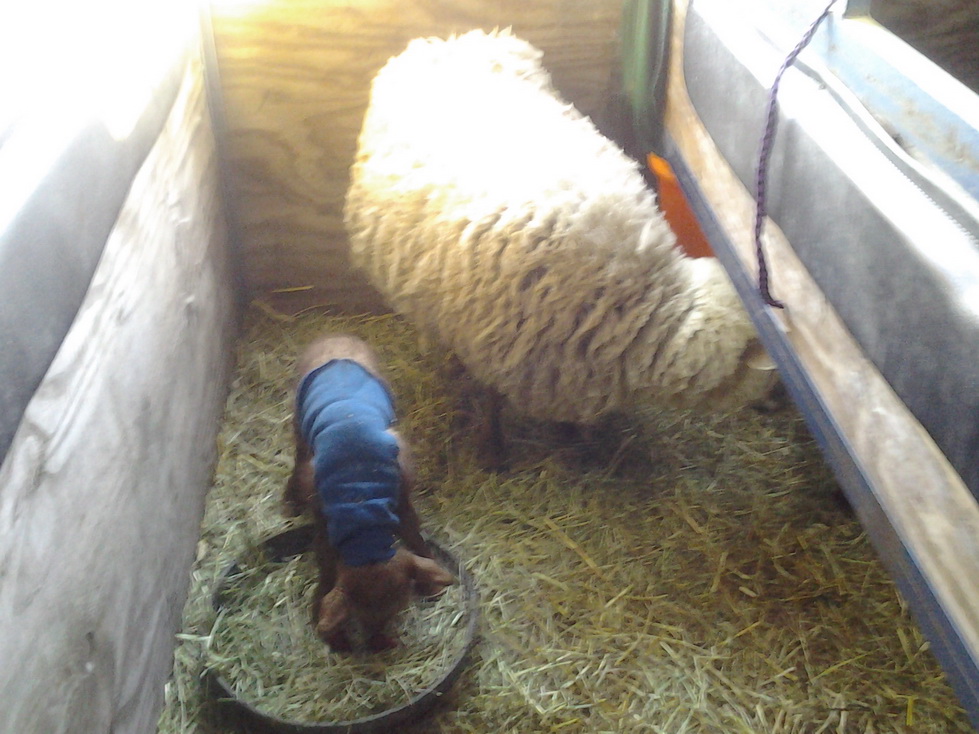
christine lamb 1
I thought that was it.  2 days later, I went out to the pasture to feed, and I noticed all of the sheep were laying outside of the shelter even though it was windy.  It made me suspicious, so instead of just throwing hay over the fence, I went inside and walked to the shelter.  There was a ewe and a lamb.  All of the sheep stayed outside (I’m guessing) to make sure they didn’t step on the lamb.  My horse trailer was not safe for any more ewes, so we put her in my old chicken coop.
I then noticed that my 11-year-old ewe was bagging up and even though she was fat around her stomach, I could feel her spine and ribs.  I brought her up to the coop so I could grain her.  About two weeks later, she had twins.
Another ewe was bagging up.  I had to put her in the horse trailer because we were running out of room in the coop.  We set up an outside pen so the sheep could go in and out of the trailer.  That ewe had a lamb but it was weak and I was afraid to leave it in with so many sheep (afraid it would get trampled), so we made it a bottle baby.
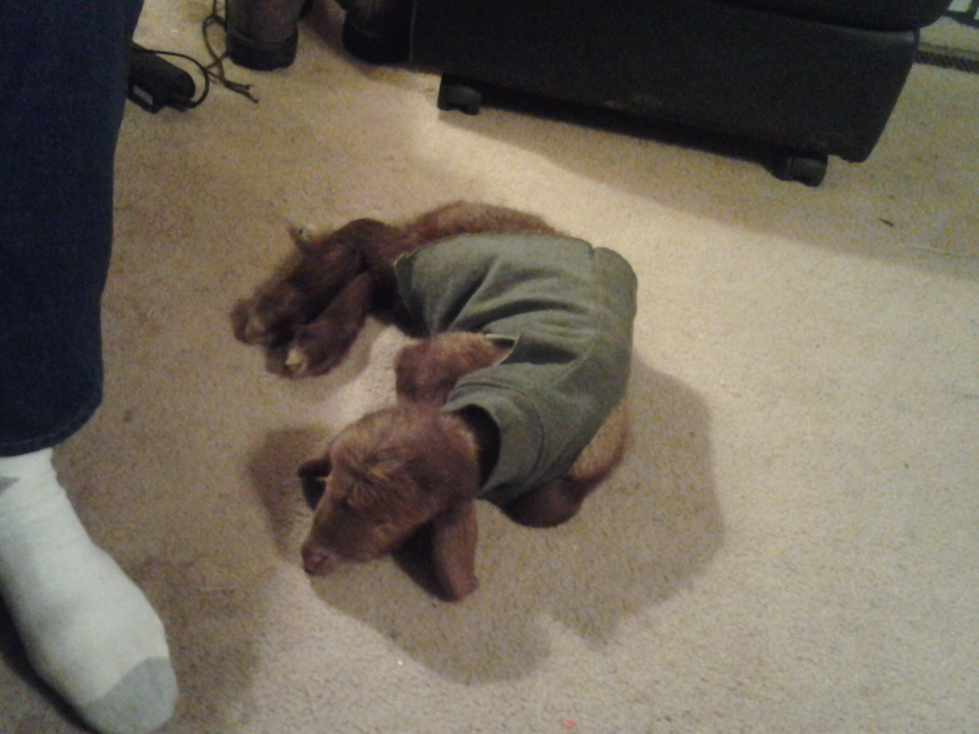
christine lamb 2
It was snowing one morning, and I went out to the sheep pasture, and found a lamb laying in the snow with mama nowhere to be found.  My second bottle baby.
In total, we had 8 lambs born to 6 ewes.  One of the first set of twins died because the mother rejected him.  I kept him in with the mother, holding her and forcing her to let him nurse and supplementing him with a bottle.  One morning, I found him dead.  It looked like his neck was broken.  Either his mother or the other ewe must have stepped on him or shoved him against the wall when he tried to nurse.  He was almost 2 weeks old, so it was very sad.
The first lambs were born on January 18 and the last on February 11.
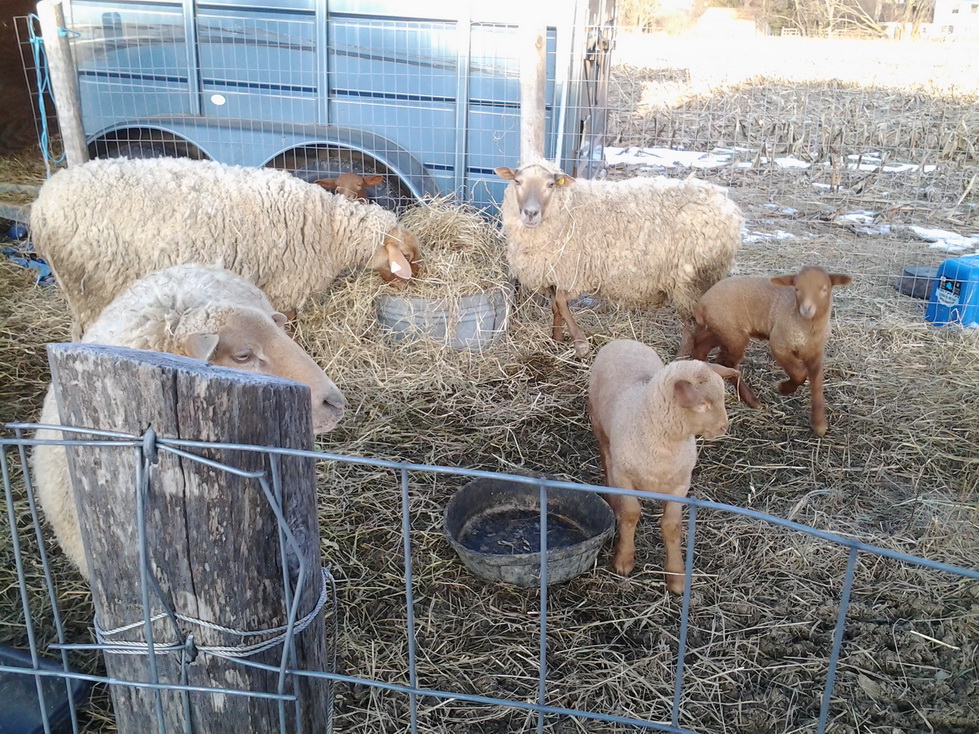
christine lamb 3
Besides losing the one lamb, my only regret is that I didn’t get to see Cameron breeding the ewes through the fence!
~~~~~~
I’ve heard of rams breeding ewes through a fence… but this is the first time I heard of one breeding 6 ewes through a fence!  Now I know why some breeders have “Abstinence Alleys” (space between fences so sheep cannot have direct contact)!  I am so thankful to Christine for letting me share her story.  I hope she doesn’t mind how long it’s taken me to post it!
Just when We Thought We were Finished…

… we had more lambs!

Remember that 1980s film For Keeps?  I felt like I was in the scene where Molly Ringwald announces, “I’m pregnant.  Can you pass the turnips?” when I went out to feed the sheep last Tuesday morning.

Coco was laying in the middle of the field next to a lamb.  I wondered why she was mothering a lamb when she didn’t have any.  As I got closer I realized it was her lamb!  I went right over to Fiona and felt for an udder … it was full!  I immediately brought Coco and her lamb into a lambing jug and put Fiona in the jug next to her.

Coco’s little ram lamb weighed 7 lbs and has turned out to be just as loud as his mama.

Coco lamb

The next morning I thought I saw a lamb on the baby monitor so we checked the barn before leaving for school.  Fiona had 2 lambs next to her and I checked Coco’s stall to make sure her lamb didn’t squeeze through into her jug!  Nope … she had twins!  After bringing Noah to school I went back to the barn and checked on the lambs.  The ram lamb (darker color) weighed 7.25 lbs and the ewe lamb weighed 5.25 lbs.  She’s the smallest (live) lamb we’ve had born here!

Fiona twins

When we crotched the ewes in early February we didn’t think our lambs were pregnant, but we were wrong!  Wondering how we missed it? With 2 months to go in their 1st pregnancies, they weren’t very big yet.  Also, first-timers’ udders don’t get swell too much prior to lambing.

Our shearer came out the day after Fiona had her lambs (Thursday) so everyone was able to be shorn.  {If you shear before lambing, most shearers recommend shearing 3-4 weeks before the due date so there is no chance for injury to the unborn lamb(s).}  The day after shearing, we moved all the ewes and lambs to our big stall to get used to being in a large group again.  The weather turned colder over the weekend, so we kept the flock in the barn until Sunday so the smallest lambs didn’t get too cold.

Here’s a short video I took of the ewes and lambs on Sunday.  They were so happy to be outside!

Our lambing season is now finished.  Really.  We don’t have any ewes that don’t already have lambs.  Now to watch the lambs grow!

To Flush or Not … and I’m not Talking About Toilets

Do you flush your ewes before breeding?  Many shepherds do.   Some don’t.  Some shepherds consider flushing an “intensive farming” practice and not natural for the sheep.

Esme lamb

~~ Before I go any further, let me explain what the term flushing.  Flushing is the practice of increasing feed given to the ewe before breeding.  This is usually started 2 weeks or so before introducing the ram to the ewe flock and continued for about 45 days (tapering off gradually at the end).  The ewes can be supplemented with grain, hay or by moving to a better pasture.  The increase in nutrition prior to breeding gets the ewes into good body condition that is more nourishing to fetus(es).  It can also result in the ewes coming into estrus (heat) together and their bodies releasing more than 1 ova (egg) when in estrus.  If the ewes are overweight before breeding, flushing usually has little or no effect. ~~

Bertha's Twins

I’ve flushed my ewes and also bred my sheep some years without flushing to see if there is any difference in my lamb crop.  Since this year (2013) is only our 7th lambing, I don’t have years of data to use, but the couple of years that we haven’t flushed have produced more single births than years that we did flush the ewes.

Here are the birth results from 2 years in particular, 2012 & 2013:

2012 – Flushed Ewes.     Twin births: 5     Single Births: 1

(1 set of these twins were lost prematurely – read about it here)

2013 – Did not Flush.     Twin Births: 2     Single births: 4

As you can see the percentage of twins were higher when the ewes were flushed prior to breeding.  Our 2012 lamb percentage was 1.83% vs. 1.33% for 2013.

The decision to flush your ewes or not depends on several factors: feed/hay availability for feeding ewes carrying multiples, pasture space for ewes and growing lambs, and customer-demand for lambs.  Whether you raise your sheep for fiber, meat or the show ring, you don’t want to have more lambs than you can sell or adequately keep.  We often have a waiting list for lambs, so after looking at my data, I will be flushing my ewes from now on.

A Watched Pot Won’t Boil

… and most people will tell you that a watched ewe won’t lamb either.  Our first 4 lambs were born pretty close together.  Saturday (3/2) through Monday (3/4).  You can read their story here.  Twins, Beatrice and Bertha were the next 2 ewes to lamb, and they did so within 18 hours of each other!

Beatrice had her single ewe lamb close to midnight, Tuesday night (3/5).  Everything went well.  We woke up to baby-lamb baas over the baby monitor sometime before 1am and I went out to the barn.  The lamb was already standing and nursing so I decided it could stay with Beatrice in the big stall until the morning when I was more awake.  I dipped the lambs navel and weighed her (9.25 lbs), then went back to bed.

Beatrice lamb

Wednesday afternoon (3/6), we had a pediatrician appointment after school and got home around 4:30 to Bertha cleaning off twin ram lambs!  I got out to the barn quickly to make sure both were nursing, and to weigh them.  The older one was 8.75 lbs and was lighter in color; his darker twin was 9.5 lbs.  Since I still had to get ready to leave for work, I hurried back to the house and Dave took care of moving Bertha and the twins to the lambing jug.

bertha lambs

The first 5 ewes to lamb were 4 sisters and 1 daughter.  I’ve heard that related ewes go into heat around the same time … I wonder if that is true.

Thursday and Friday didn’t bring any lambs, but Esme had a single ram lamb (10.75 lbs) early Saturday morning (3/9).  We got out to the barn around 1:50am and got her and her lamb to the jug.  This is her first lambing and she did very well.  Esme seemed a little nervous about her lamb nursing but quickly settled down and we were back in the house in just a half-hour.

Esme lamb

We’ve past the last possible lambing date from the ewes being exposed to the ram lambs and Camille is still definitely pregnant.  We’ve estimated that she will probably not have her lamb(s) until at least 3/30 since after being exposed to the ram lambs, she was exposed to our ram, Ezra beginning on 11/1/12.

Stay tuned!

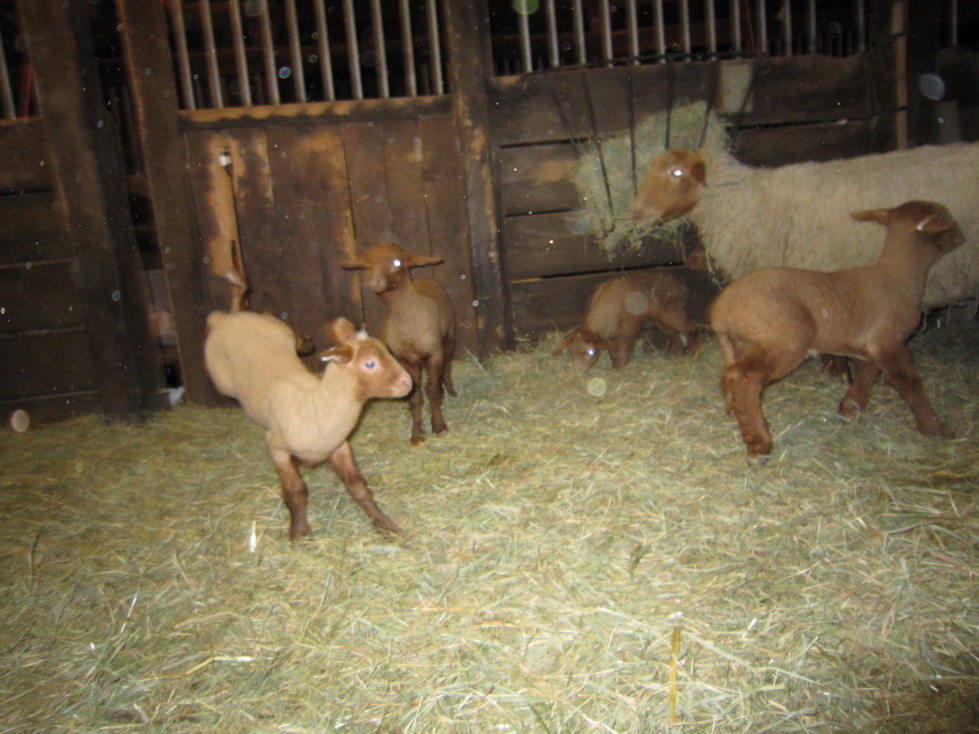
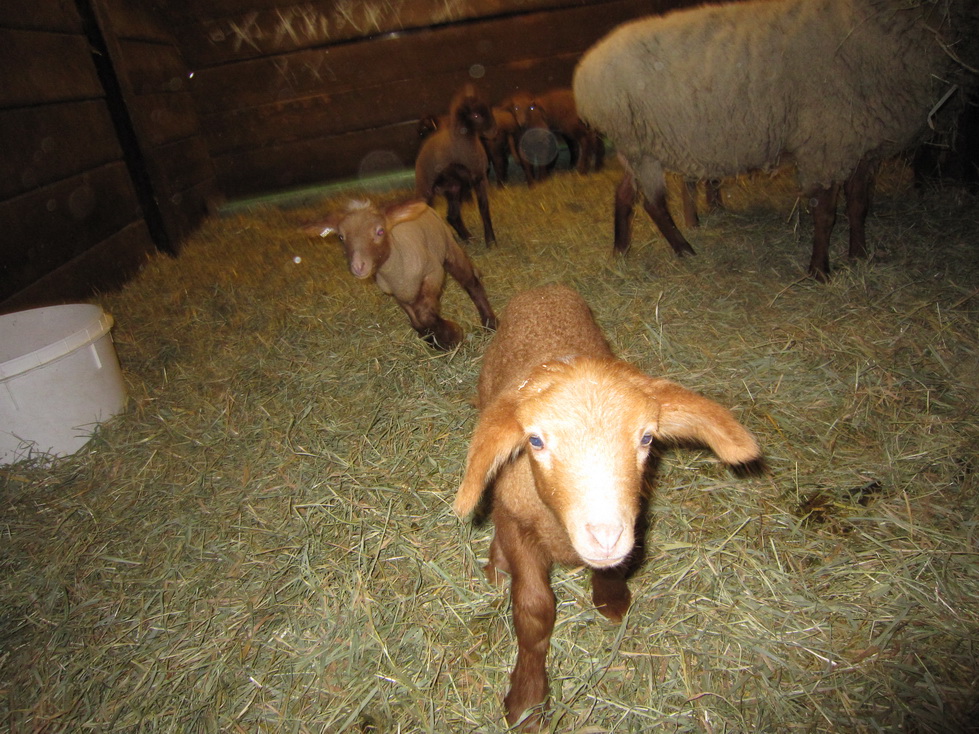
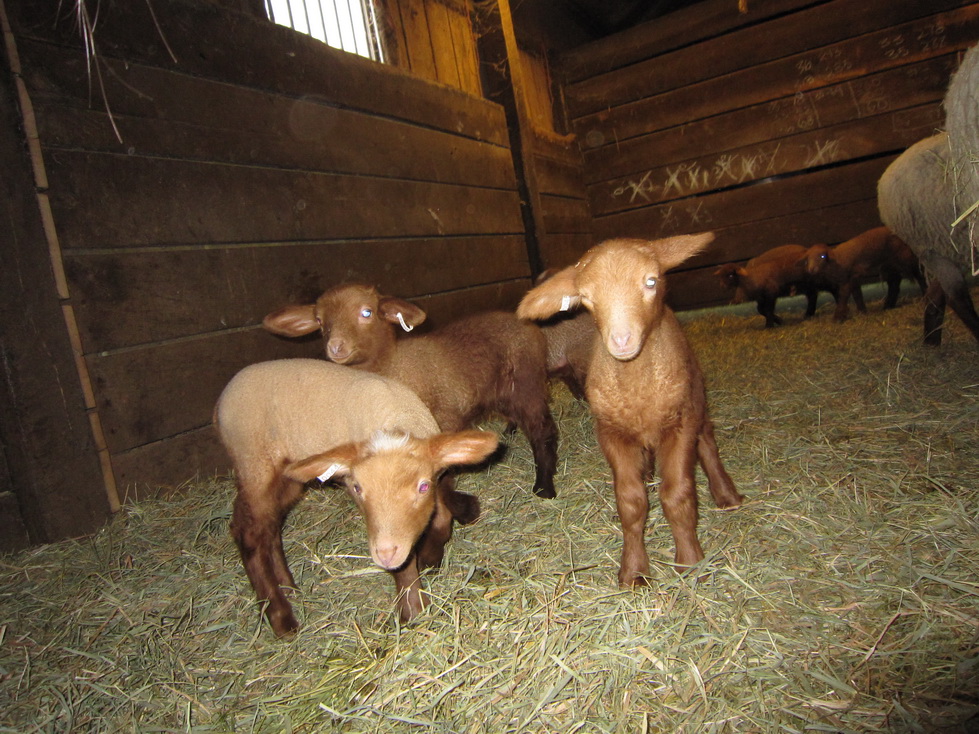
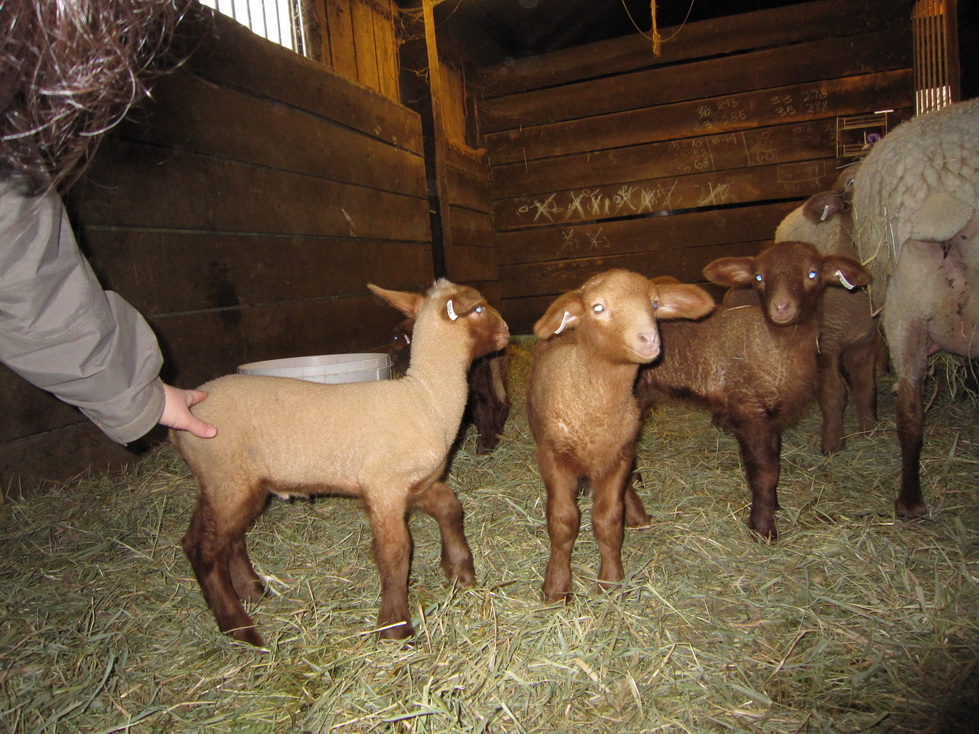
Typical Lamb Photo Shoot

Have you ever tried to photograph 2 specific lambs out of the 8 that you have?  Especially 8 super friendly and curious lambs?  No?  Well, it goes something like this:

tunis lambs

tunis lambs

tunis lambs

tunis lambs

tunis lambs

tunis lambs

tunis lambs

tunis lambs

tunis lambs

And here’s a short video for you:

I did finally get the shot I was after:

Bertha's Twins

All it took was patience … and a lot of maneuvering.

When Abortion in Sheep Can be Prevented

When Abortion in Sheep Can be Prevented

This is Duffy’s story:

Duffy

Duffy was born to Rosy in 2010, our only triplet birth on the farm so far (you can read about it here).  She was due to lamb for the 1st time in early March, 2012.  About ten days before she was due she went into labor – on February 25th – and I was the only one home because I was sick.  I went to feed hay in the late afternoon/early evening and found Duffy in the back of the pasture by herself.

I got her into the barn but her labor did not progress so I tried to assist.  She was hardly dilated and I couldn’t get to the lambs.  Plus there was an odor… a bad odor.  I called our vet, Dale (who is now retired and missed dearly), and he and his wife got to our place about 45 minutes later.  He pulled twin lambs with a lot of difficulty and gave Duffy antibiotics and other medications.  He estimated that the lambs had died a day or so prior to her aborting them.

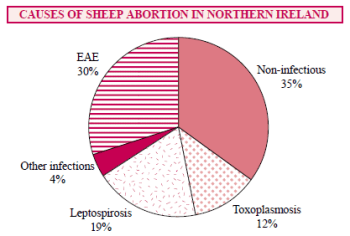
He told me to call him if any other ewes aborted because if the cause of Duffy’s abortion was infectious, it could go through the flock.  Over the next days and weeks I watched the other pregnant ewes closely and researched causes for abortion in sheep.  I learned that a large percentage of sheep abortion is caused by non-infections diseases – read: injury, rough handling, poisonous plants and inadequate feeding.

Causes of Abortion in Sheep in N Ireland

During this time I began to consider that Duffy had been injured prior to aborting her lambs and tried to remember any incidence of injury.

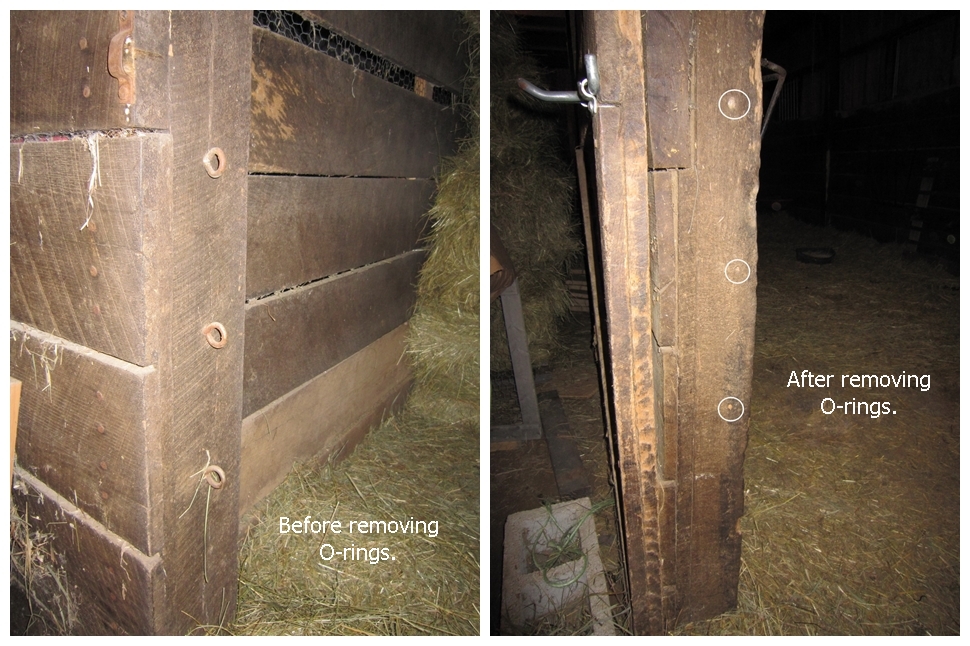
Two days before Duffy aborted her lambs we vaccinated the pregnant ewes.  I remembered that Duffy had gotten pushed by another sheep into the stall doorway on her way out of the barn when we led the sheep back to their pasture.  The doorways had O-rings on them from when the barn housed horses and I believe that is what caused her abortion.  I immediately took the O-rings off the doorways of any stall that the sheep would enter.

stall doorways - before and after

Our other 5 ewes lambed normally in March and produced a total of 9 lambs (4 sets of twins and a singleton).

Please look all around your sheep handling areas to be sure there are no potential hazards.  We used this stall without any trouble for 6 years, BUT it only takes 1 second for a freak accident to happen.  This time it cost us 2 lambs.

Oops… or, Another Lesson Learned

We have bred our sheep and had successful lambing seasons for 6 years. This fall breeding season, however, turned out to be a learning experience for us.

Usually at 3 months our lambs are separated from their dams for weaning. After 2-3 weeks we move the ewe lambs back to the pasture with the adult ewes. The ram lambs go in the pasture with our adult rams and wethers. For some reason (I can’t remember why right now), we let ALL the lambs go back to the pasture with their dams for the summer.

On October 13th, we took all the ram lambs away from the ewes because we saw some *frisky* behavior going on.  We had decided to put our rams in with the ewes in early November so that we wouldn’t have lambs until April.  We separated our rams so that Ezra and Camille we together in one field (Camille is our only ewe that Ezra is not related to), and Raulie was with Annie, Abigail, Bertha, Beatrice, Erin and Esme.  We put all the lambs in a 3rd field with our wether BFL and goat.

{Some background info on sheep breeding… We put breeding harnesses that hold crayons on our rams each breeding season.  When the ram mounts the ewe the crayon on the harness rubs on her rump.  We then have  visual evidence of breeding and can mark our calendar accordingly so we can calculate when any lambs will be born.  Sheep cycle ever 14-18 days, therefore, you should change the color crayon in your ram’s breeding harness every 14-15 days.  If a ewe is marked with the second color, this means she did not conceive during the 1st cycle.  Any ewe that did conceive in the 1st cycle will not cycle again and the ram will not have any interest in mounting her.}

After 2 weeks of rams and ewes together, not one of the ewes was marked with color on their rump.  We usually breed in October, I started to wonder if we missed our window of opportunity, but I didn’t really think that was the case because we have had rams breed ewes though December.  Since none of the girls were marked, I didn’t bother changing crayon colors for their next cycle.  Two more weeks with nothing, and during that time I started thinking that we left the ram lambs in with their dams too long because the adult rams were not mounting the ewes at all.  You’ll remember that we did see some frisky behavior earlier in the fall, but we didn’t witness any actual breeding.

Now that we’re in the New Year, we are anticipating a surprising lambing season because we think our ewes are pregnant, but we don’t have any idea when they are due.  We guess that any lambs will be born BEFORE mid-March since we took the ram lambs away from the ewes in mid-October.  Unfortunately this lamb crop will not be able to be registered, but we will look forward to the lambs anyway!!

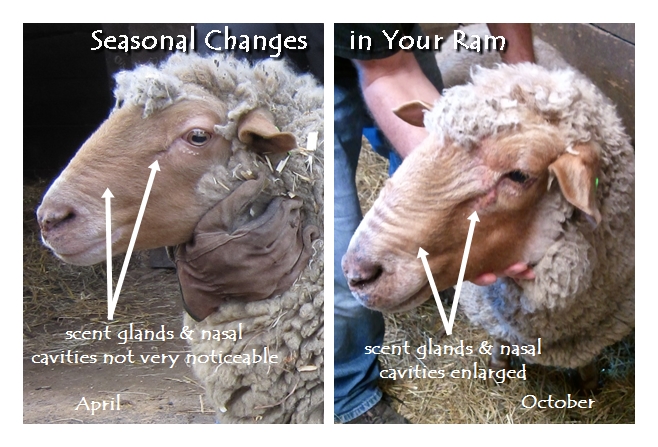
Seasonal Ram Changes

Autumn is here and that means we will be breeding our sheep soon.  I really find it amazing how rams change during the late summer and early fall in preparation for breeding.

Above are 2 photos of our newest ram, Raulie.  The photo on the left was taken when we got him in April and the one on the right is from yesterday (September 30th).  You can immediately see differences in his facial features – his face is more wrinkled and swollen now.

As soon as you come close to (most) breeding rams, you will notice a major change in them … their scent.  Most rams smell musky during breeding season (or rut) – and some smell more than others.  Sheep have scent glands between their toes and next to their eyes.  You can see in the above photo how the scent glands next to Raulie’s eyes have increased in size to produce the musky odor that comes with the breeding season.

The ram’s olfactory sense is heightened during rut so that he can more easily detect when a ewe is in estrus (heat).  To accommodate this, the nasal passages swell so that the surface area is increased.  Sheep also have a specialized organ above the roof of their mouth called the vomeronasal organ that aides in their sense of smell.  When the ram smells the ewe, he breathes into his nose and mouth.  Her scent is picked up by his olfactory cells and the vomeronasal organ and he raises his head and curls his upper lip (this is called the Flehmen response).

Isn’t it amazing how these animals were created so that their bodies change with the seasons?!

The Shepherd’s Lament

Someone shared this on one of my Yahoo groups.  It’s cute and I thought I’d share it, too.

by Dr. Darrell Salsbury, DVM

Now I lay me down to sleep
Exhausted by those doggone sheep;

My only wish is that I might
Cause them not to lamb at night;

I wouldn’t mind the occasional ewe,
But lately it’s more than just a few:

Back into bed, then up again,
At two o’clock and four a.m.

They grunt and groan with noses high,
And in between a mournful sigh,

We stand there watching nature work,
Hoping there won’t be a quirk:

A leg turned back, or even worse,
A lamb that’s coming in reverse.

But once they’ve lambed we’re glad to see
That their efforts didn’t end in in tragedy.

There’s no emotion so sublime
As a ewe and lamb that’s doing fine.

I’m often asked why I raise sheep,
With all the work and loss of sleep;

The gratification gained at three a.m.
From the birth of another baby lamb–

How can you explain, or even show?
‘Cause only a shepherd will ever know!