Oops… or, Another Lesson Learned

We have bred our sheep and had successful lambing seasons for 6 years. This fall breeding season, however, turned out to be a learning experience for us.

Usually at 3 months our lambs are separated from their dams for weaning. After 2-3 weeks we move the ewe lambs back to the pasture with the adult ewes. The ram lambs go in the pasture with our adult rams and wethers. For some reason (I can’t remember why right now), we let ALL the lambs go back to the pasture with their dams for the summer.

On October 13th, we took all the ram lambs away from the ewes because we saw some *frisky* behavior going on.  We had decided to put our rams in with the ewes in early November so that we wouldn’t have lambs until April.  We separated our rams so that Ezra and Camille we together in one field (Camille is our only ewe that Ezra is not related to), and Raulie was with Annie, Abigail, Bertha, Beatrice, Erin and Esme.  We put all the lambs in a 3rd field with our wether BFL and goat.

{Some background info on sheep breeding… We put breeding harnesses that hold crayons on our rams each breeding season.  When the ram mounts the ewe the crayon on the harness rubs on her rump.  We then have  visual evidence of breeding and can mark our calendar accordingly so we can calculate when any lambs will be born.  Sheep cycle ever 14-18 days, therefore, you should change the color crayon in your ram’s breeding harness every 14-15 days.  If a ewe is marked with the second color, this means she did not conceive during the 1st cycle.  Any ewe that did conceive in the 1st cycle will not cycle again and the ram will not have any interest in mounting her.}
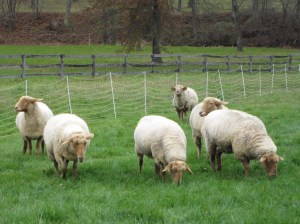
After 2 weeks of rams and ewes together, not one of the ewes was marked with color on their rump.  We usually breed in October, I started to wonder if we missed our window of opportunity, but I didn’t really think that was the case because we have had rams breed ewes though December.  Since none of the girls were marked, I didn’t bother changing crayon colors for their next cycle.  Two more weeks with nothing, and during that time I started thinking that we left the ram lambs in with their dams too long because the adult rams were not mounting the ewes at all.  You’ll remember that we did see some frisky behavior earlier in the fall, but we didn’t witness any actual breeding.

Now that we’re in the New Year, we are anticipating a surprising lambing season because we think our ewes are pregnant, but we don’t have any idea when they are due.  We guess that any lambs will be born BEFORE mid-March since we took the ram lambs away from the ewes in mid-October.  Unfortunately this lamb crop will not be able to be registered, but we will look forward to the lambs anyway!!
Seasonal Ram Changes

Autumn is here and that means we will be breeding our sheep soon.  I really find it amazing how rams change during the late summer and early fall in preparation for breeding.

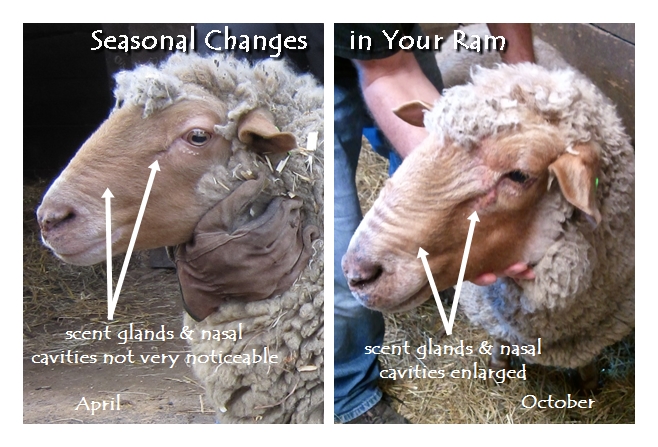
Above are 2 photos of our newest ram, Raulie.  The photo on the left was taken when we got him in April and the one on the right is from yesterday (September 30th).  You can immediately see differences in his facial features – his face is more wrinkled and swollen now.

As soon as you come close to (most) breeding rams, you will notice a major change in them … their scent.  Most rams smell musky during breeding season (or rut) – and some smell more than others.  Sheep have scent glands between their toes and next to their eyes.  You can see in the above photo how the scent glands next to Raulie’s eyes have increased in size to produce the musky odor that comes with the breeding season.

The ram’s olfactory sense is heightened during rut so that he can more easily detect when a ewe is in estrus (heat).  To accommodate this, the nasal passages swell so that the surface area is increased.  Sheep also have a specialized organ above the roof of their mouth called the vomeronasal organ that aides in their sense of smell.  When the ram smells the ewe, he breathes into his nose and mouth.  Her scent is picked up by his olfactory cells and the vomeronasal organ and he raises his head and curls his upper lip (this is called the Flehmen response).

Isn’t it amazing how these animals were created so that their bodies change with the seasons?!

Fall is Almost Here…

…and the garden is winding down. 

This summer, in southeastern PA, has been a weather rollercoaster.  A pleasant but dry June was followed by a HOT and even drier July.  August brought some cooler temperatures and rain.  Lots of rain.  And flooding – especially with the arrival of Hurricane Irene and the remnants of Tropical Depression Lee.  Philadelphia recorded its wettest month EVER in August!  My garden is looking a little unkept now – to say the least – since I haven’t been tending it in the rain.

I had several firsts this year in my veggie garden!  I harvested my 1st asparagus from the bed I started last year.  I tried growing tomatoes from seed planted directly into the ground.  I didn’t spray any insecticide (I only use 100% natural sprays when I need to use them).  I also saw my 1st lacewing in my garden!

Last year I planted 10 asparagus crowns and only 2 didn’t make it.  The other 8 began sending up spears in April and I was able to harvest a few during a 2-3 week window.  New research has shown that you don’t have to wait till the 3rd year before harvesting, and harvesting the 1st year after planting actually increases the buds that are formed by the crown.  For more information on growing asparagus, click here.

For the 2nd year in a row my seedlings didn’t grow more than 2 inches.  Although I haven’t figured out the cause yet, I tried planting my tomato seeds outside at our last frost date (for our zone 6 garden, it’s May 15th).  I heard someone say that they regularly do this and harvest tomatoes the same time as their neighbor who uses started plants.  I must say I was a little skeptical, but my seeds sprouted and grew.  I trellised and pruned them, and they began to produce fruit.  I ended up harvesting tomatoes the same week my father-in-law, who used started plants, did!

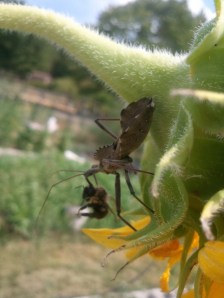
This summer I didn’t spray my garden at all with pesticide.  I usually use an all-natural product called Pyola from a company called Garden’s Alive.  It’s a concentrate made of pyrethrins and canola oil that you dilute with water and apply as needed. I did use diatomaceous earth on my eggplant to try to control the flea beetles that were attacking it, but after seeing my 1st lacewing in my garden I decided to try to do without spraying the entire garden.  In addition to the lacewing, my Garden Patrol also included Wheel Bugs,

adult wheel bug eating a bumblebee


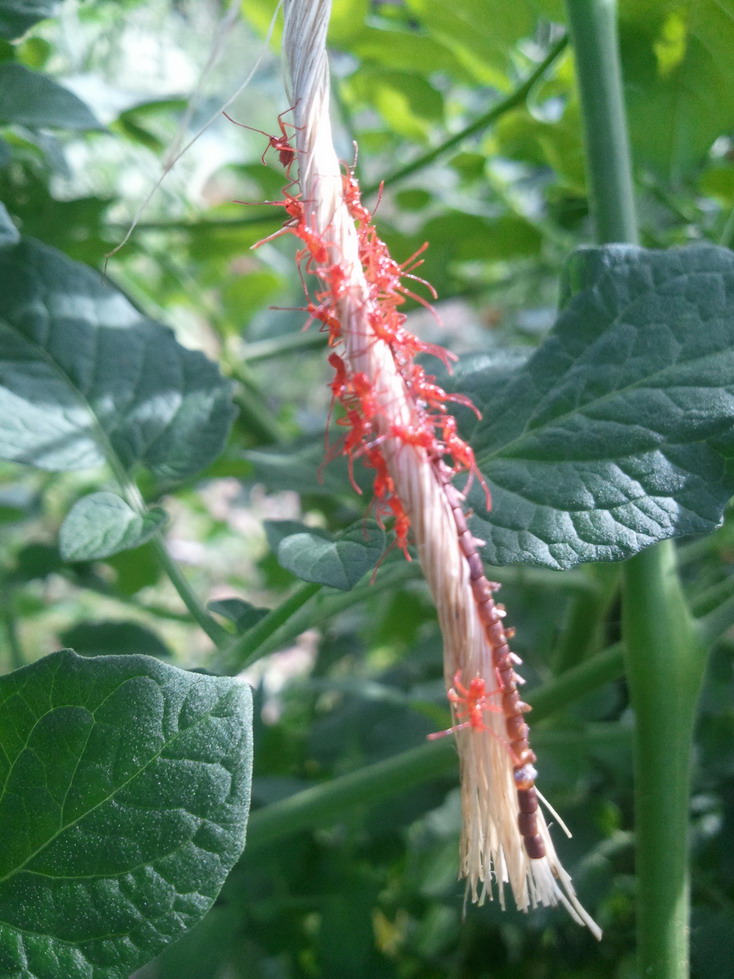
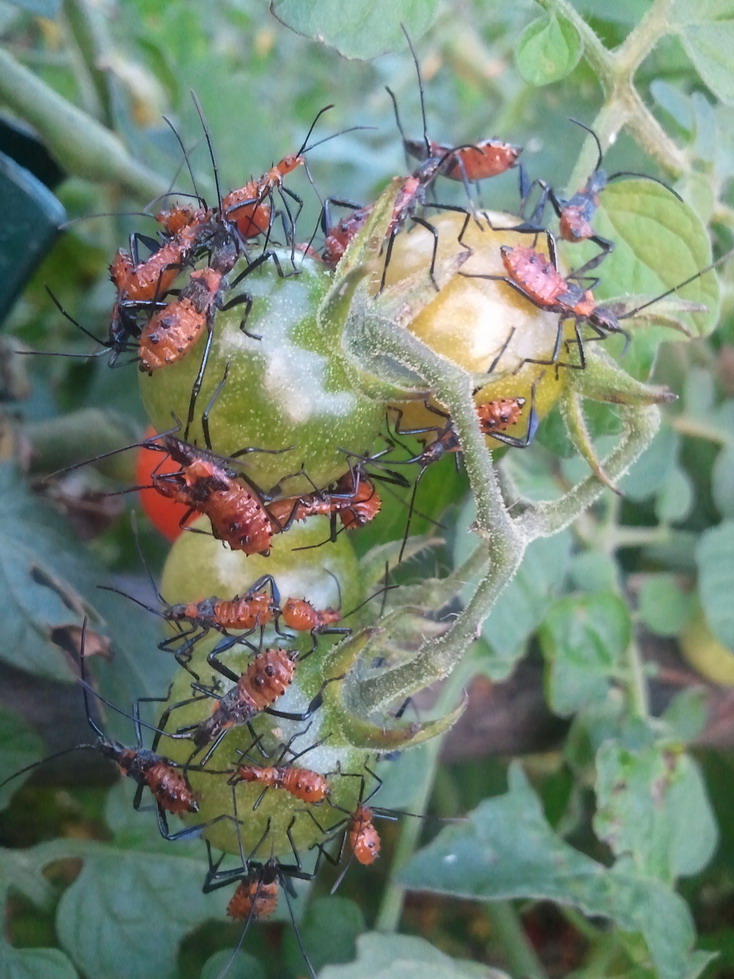
hatchling wheel bugs and eggs


wheel bug nymphs

Praying Mantises,

praying mantis on a tomato plant

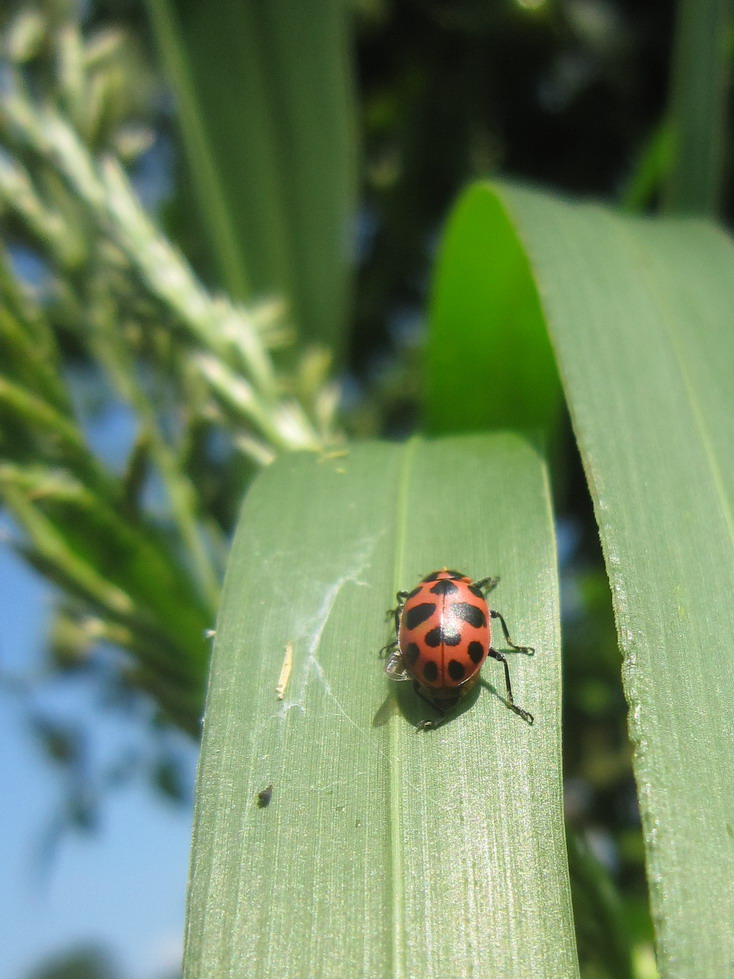
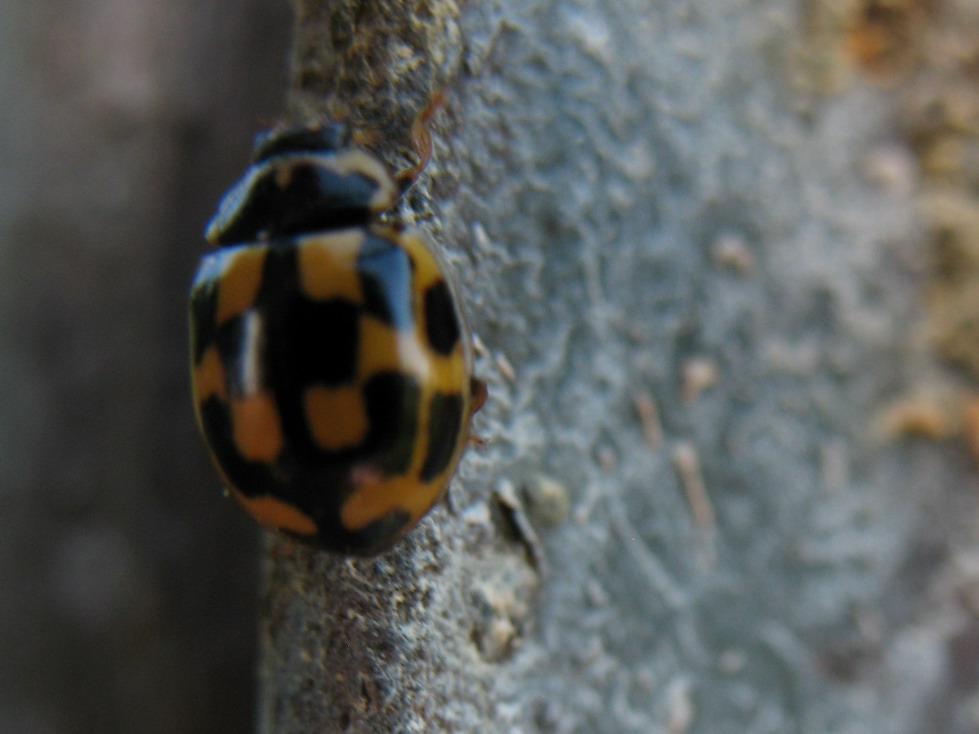
various spiders, native and Asian Ladybugs,

pink spotted ladybug


checkerboard ladybug

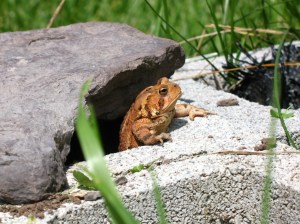
frogs, American Toads,

American toad

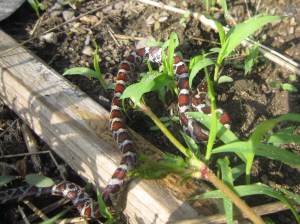
various songbirds and Milk Snakes .

juvenile milk snake

I truly enjoyed all of the life in the garden this year and always wondered what I’d see each time I worked in it.  I have big plans for next year and I’m anxious to start on them.  We’re going to finish putting mulch down in between the beds to eliminate the need to mow the garden.  I’m also adding a perennial herb bed with rocky areas for snakes and toads to hide.  The birdbath will move to the center of this bed.  Lastly, we’re going to plant 2 organically grown blueberry bushes next spring.

Stay tuned for updates along the way!

New Life

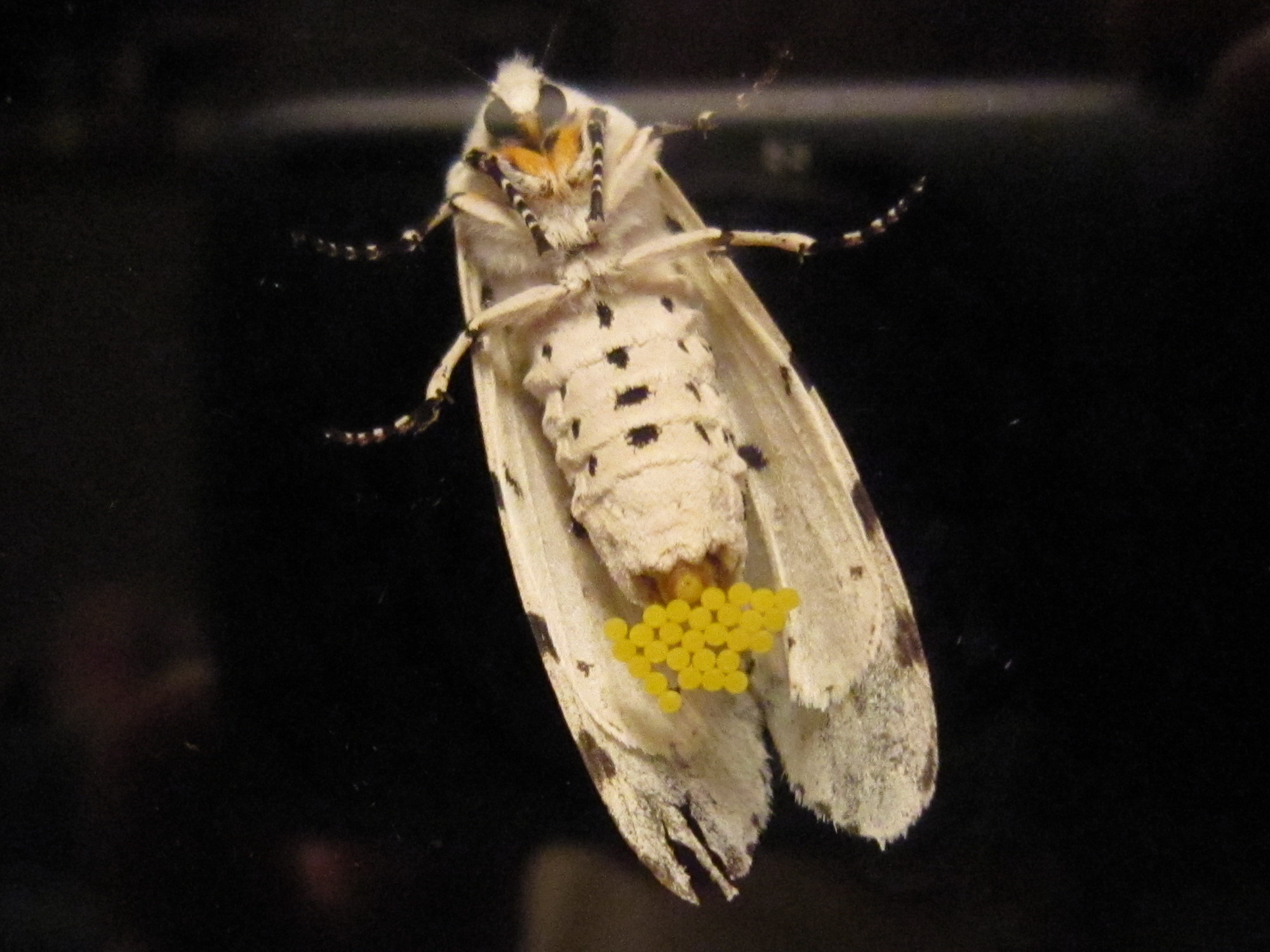
Every year we experience the wonderful miracle of life here on our farm many times over.  Sometimes it happens right under our noses without us knowing.  Tonight I found a female Tiger Moth laying her eggs on our front door.

Female Tiger Moth

Amazing to watch!

Laying another egg!

Trying a New Waterer

Last year we added ducks to our chicken coop.  It worked quite well, except for the mess they made of the waterer.  For a long time we had the waterer in the chicken house raised so only the chickens could get to it, and a general water trough outside.  This worked for a while, but eventually became a mess in its own way.  If only we had an automatic water system…

Then one day we got our FarmTek catalog in the mail.  Looking through it, I saw that they had a plan for making a poultry drinker with a 5-gallon bucket and their Super Flow push-in Nipples.   Basically you get a 5-gallon and drill 3 holes in the bottom.  push the drinker nipples in, fill with water and hang it so the bottom is about eye-level for your poultry.  We keep the lid on the bucket so that the water stays clean, but we only snap it on in 1 or 2 places so it’s easy to take off.

We ordered 6 nipples but just make one waterer to begin.  We showed the poultry how to drink from it by holding their beaks to it and they will drink from it, but still prefer the outdoor water bowl.  I think if we switched over to only this type of waterer, they would use it without problem.

We made a 2nd drinker when our ducklings were old enough to house with the rest of the chicks.  The young chicks, ducklings and poults adapted more quickly to the new system than the older birds did. 

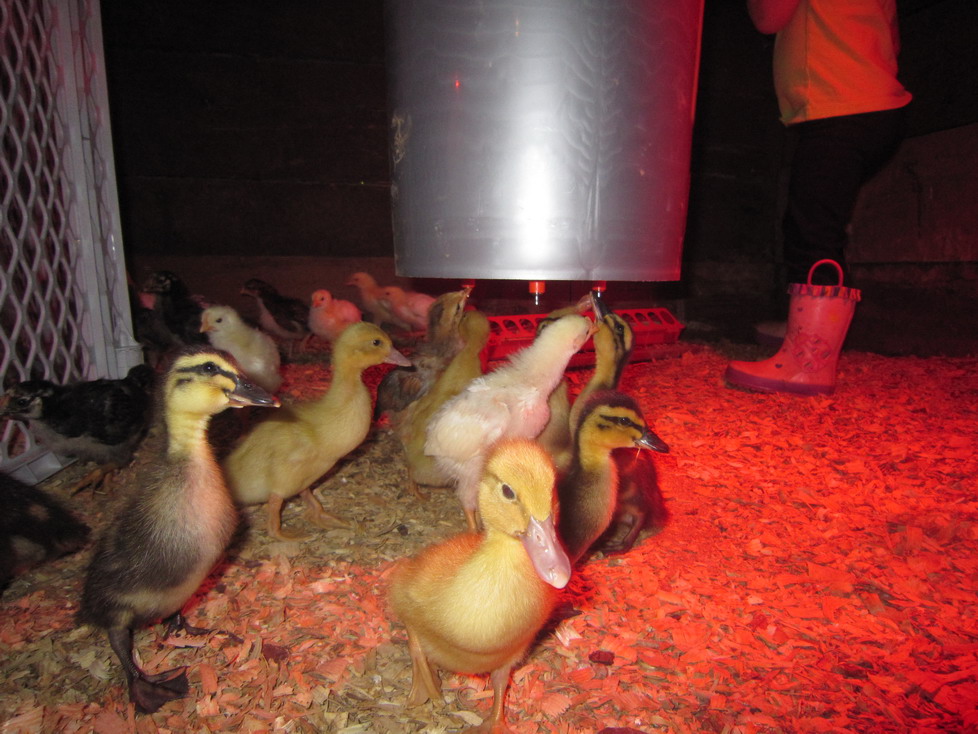
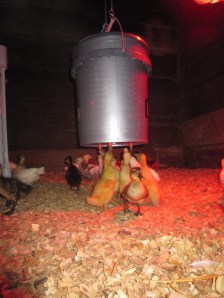
Here are photos of the drinker in the chick nursery:

Chicks and ducklings drinking from hanging waterer

Another picture showing the handle

They are still using this waterer exclusively, however, when the rain fills their little pond up they prefer to drink out if that.  Even though they have been trained to use this bucket drinker, drinking out of a trough (or puddles) is more natural to them.

A New Season … More Stink Bugs

More and more people are meeting one of our most recent invasive pests, the Brown Marmorated Stink Bug (BMSB).  It had spread to at least 29 states since it was introduced in a shipment to eastern PA sometime during the 1990s.  They were first collected in Allentown, PA, in 1998.

BMSBs are a major agricultural pest in Asia, feeding on fruit crops and their population in the US has reached numbers to make it a real problem to American orchardists, too.  They don’t eat entire fruits or even make them inedible.  They disfigure hundreds of individual fruits – like apples – so that they cannot be marketed for fresh fruit sale.  Instead these apples and other fruits can only be used for cider or juice. 

Adult BMSB
Now that spring has arrived (in most of the country, anyway) we will be seeing more adult stink bugs waking up from hibernation in our homes.  Our family flushes all that we find so they don’t stink up our vacuum cleaner!  I have been wondering, lately, if they could be used for anything else…say a food source for something.  I happened upon a forum today with some interesting ideas for “disposing” of BMSBs.  Here’s the link: http://forums.gardenweb.com/forums/load/pagard/msg101628188305.html; the discussion thread is called “Fun Organic way to Deal with Pesky Brown Stink Bugs.”  I particularly like that one person’s pet turtle loves them!  I’m considering catching some in a jar, freezing them and feeding them to our chickens.  I’ll let you know if they eat them!

In addition to waking up from hibernation, BMSBs will also be reproducing soon.  Here’s a photo from the Penn State Cooperative Extension, York County of stink bug eggs and the hatched larvae:

BMSB eggs and larvae
The Penn State department of Entomology describes the eggs as, “elliptical (1.6 x 1.3 mm), light yellow to yellow-red with minute spines forming fine lines. They are attached, side-by-side, to the underside of leaves in masses of 20 to 30 eggs.” The adults reproduce from May to August and produce one generation per year in Pennsylvania , depending on the temperatures. Here is an image of BMSB nymphs

BMSB Nymphs

If we educate ourselves to the different stage of the BMSB, we can work at reducing their numbers – from egg stage to adult!

The Shepherd’s Lament

Someone shared this on one of my Yahoo groups.  It’s cute and I thought I’d share it, too.

by Dr. Darrell Salsbury, DVM

Now I lay me down to sleep
Exhausted by those doggone sheep;

My only wish is that I might
Cause them not to lamb at night;

I wouldn’t mind the occasional ewe,
But lately it’s more than just a few:

Back into bed, then up again,
At two o’clock and four a.m.

They grunt and groan with noses high,
And in between a mournful sigh,

We stand there watching nature work,
Hoping there won’t be a quirk:

A leg turned back, or even worse,
A lamb that’s coming in reverse.

But once they’ve lambed we’re glad to see
That their efforts didn’t end in in tragedy.

There’s no emotion so sublime
As a ewe and lamb that’s doing fine.

I’m often asked why I raise sheep,
With all the work and loss of sleep;

The gratification gained at three a.m.
From the birth of another baby lamb–

How can you explain, or even show?
‘Cause only a shepherd will ever know!

Right Now?!

I’m sure I’m not the only one who thinks everything always happens at once.  Does the phrase, “Never a dull moment” describe anyone elses’ life perfectly?

Today I had an appointment with the state veterinarian at 11 am to complete our annual inspection for the USDA Scrapie Eradication Program.  Hannah and I had been outside feeding the critters earlier and then came in for a break for a while.  We bundled up (it was 20 degrees colder today than it was yesterday!) and ventured back outside at 10:30.  While I brought fresh swimming water to the ducks I saw the vet’s SUV coming up the drive.  OK… I had wanted to get the ewes into the barn before he got here … luckily he had some paperwork to finish so I had time to persuade my girls to come to the barn.

I got as far as the gate when I heard it.  Little, tiny, adorable lambie baa’s.  I was expecting our ewes, Beatrice and Camille, to lamb at any time but I had let them out of the barn for some exercise and fresh grass.  Beatrice was on the other side of my garden with 2 still wet lambs!  One was standing; the other hadn’t been cleaned off yet.  I quickly fetched 2 towels, helped dry off the 2nd lamb and brought mama and babies into the barn.  Once I had them together in a lambing jug (or pen), I went to gather the other ewes into the barn.

Our inspection went well and once I had made Hannah lunch I went to check on Beatrice and her twins.  The ewe lamb weighed 9.5 lbs and the ram lamb weighed 8.75 lbs.  I made sure the both knew where to nurse and headed back to Hannah in the house.

Many Thanks!!

A big heartfelt “Thank You” goes out to Heather from Bee Vintage Redux for choosing me to receive a Liebster Award for my blog!  Never heard of a Liebster Award?  Neither had I until yesterday! 

The goal of the Liebster Award is to recognize crafty blogs with less than 300 followers and share them with others.  Upon accepting this award you agree to:  1) Blog about the Liebster award & reveal your 3 blog picks;  2) Let the recipients know that you chose them; 3) Copy & paste the blog award on your blog.

The blogs I want to award with the Liebster are (in no particular order, of course):

Jenny at Sheepy Hollow Farm, who is such a creative woman and even inspired me to make my own fresh cheese!  Jenny posts lots of how-to’s for fiber and herbal crafts, as well as, gardening and cooking.  Her Shetland sheep also produce lovely wool!

Leann at Forbidden Woolery has such a talent for hand dyeing wool.  I met her at the Garden State (NJ) Sheep Breeder’s Association Sheep & Fiber Festival last September and bought some hand-dyed wool (in Professor Plum colorway).  I love that she names her colorways by what inspired them!

Sara at Sara’s Texture Crafts.  I don’t actually know Sara, but she always has such beautiful fiber and great tools in her Etsy shop!  I just have to check out what’s new in her shop when I browse Etsy.

Please take some time and visit these wonderful women’s blogs and shops!  Oh, and by the way, visit Heather’s blog and check out all her beautiful recycled vintage jewelry.