Amazing Lavender

This evening I was pulling out some Pennsylvania smartweed but didn’t notice the bumblebee among the flowers and was promptly bitten.  I immediately remembered what my friend, Jenny, had told me after my encounter with a yellow jacket last month…  ” Lavender essential oil applied immediately r-e-a-l-l-y HELPS!  Almost no swelling/pain!” 

Well, I don’t have any lavender EO in the house, but I do have lavender plants in my perennial garden.  I plucked a few sprigs off a plants, crushed the leaves and held it to the bite.  I honestly wasn’t sure if it would help, even though I know lavender is wonderful for burns (more about that later).  Within a few minutes I had no pain!  I continued working in the garden and picked a bunch of beans!

…now to lavender and burns.  Back in college I worked at The Body Shop and learned that lavender can speed the healing of burns.  This was discovered by someone who was working with lavender oil a long time ago, got burned while doing his experiment and accidentally spilled the lavender oil on his hand.  The burned area that was covered by the lavender oil healed much faster than the rest of the burn. 

I have gotten burned in the kitchen several times and applied crushed lavender leaves immediately.  Viola!  Pain relief and quick healing. 

A few months ago I was having soup for lunch…it was much hotter than I thought it was.  I burned my mouth so bad…I don’t think I’ve ever burned my mouth that bad before!  I took a big drink of cold water, but I remembered that I read somewhere that sugar helps if you burn your mouth…not sure how or why…but I got some sugar out. 

Then I thought about the lavender…so I ran out and picked some leaves.  I put them in a sandwich bag with the sugar and crushed the leaves so that the sugar could absorb the lavender oil.  I picked out the leaves and let a couple teaspoons dissolve in my mouth.  The pain subsided slowly and I took a couple more teaspoons of sugar later that day.  Do you know how after you burn your tongue you can’t taste anything very well?  That evening my mouth felt better…and, even more importantly, I could taste my dinner.

If you’d like to make your own Lavender Infused Sugar, simply add a teaspoon or so dried lavender buds to a cup of sugar.  Store in a canning jar or other jar in a dark place for 2 weeks.  Shake the sugar every day or couple days so the sugar can absorb the oils.  You can strain the buds out or leave them in.  Enjoy!
Tour de … Fleece?

I’m sure you’ve all heard of the Tour de France, the 22-day long bicycle race across France starting on July 2nd … but how many of you have heard of the Tour de Fleece?  I’m sure if you’re familiar with Ravelry you’ve heard of it! 

Many handspinners around the world spin yarn while the cyclist are racing.  That’s right … 20 days of spinning at least a little each day with 2 rest days.  For some, it’s simple.  Others have it a little more challenging, especially those who have 2 young children, animals to feed and a growing garden. 

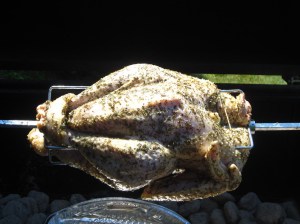
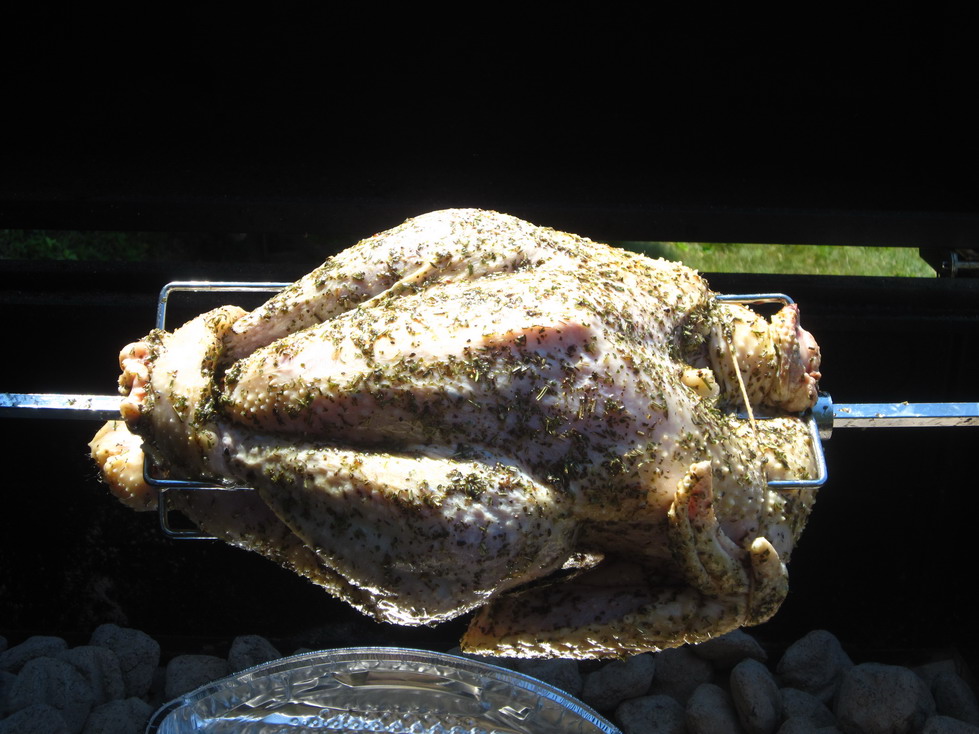
I did manage to spin every day that the cyclists rode.  To kick off the Tour I even made a special dinner on July 2nd…  One of our homegrown turkeys, rubbed with a mixture of olive oil and herbs de provence (brought home from Paris by my aunt!) rotisseried on the grill.

I also watched a lot of the race and really became interested in it.  Noah loved watching it with me in the mornings, and Dave and I watched some of it at night, too.  We all gasped when Johnny Hoogerland crashed and cheered for him when he continued racing.

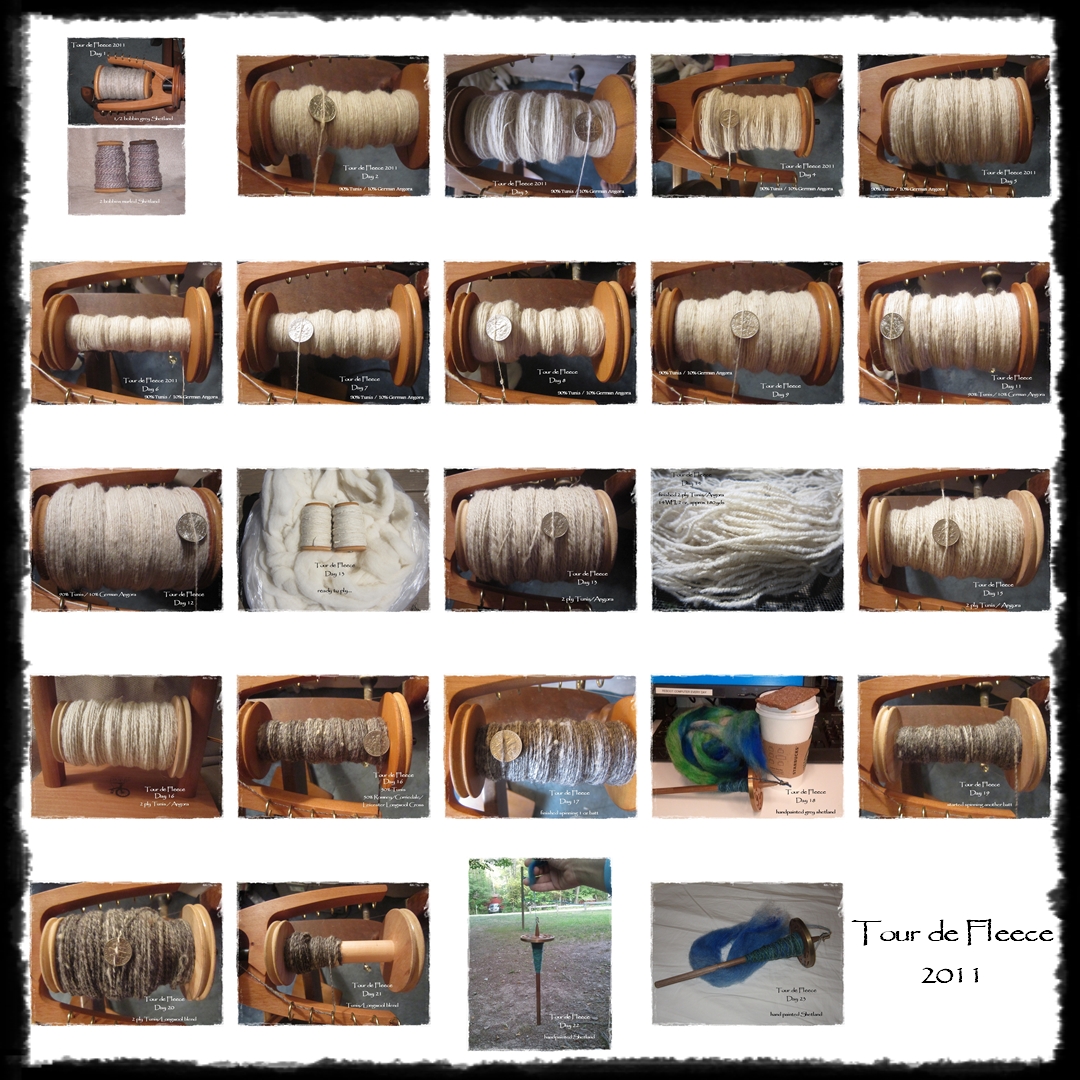
Some days I only managed to squeeze in 10 or 15  minutes but most days I spun for 30 minutes or more.  A few days I spun on my drop spindle because I didn’t have time to sit down at my wheel.  We also left for camping a couple of days before the Tour was over so I packed my drop spindle to take with us… it takes up far less room than my wheel!  I posted photos of my daily progress to my Flickr account, but here’s a collage of my work:

Tour De Fleece collage

Trying a New Waterer

Last year we added ducks to our chicken coop.  It worked quite well, except for the mess they made of the waterer.  For a long time we had the waterer in the chicken house raised so only the chickens could get to it, and a general water trough outside.  This worked for a while, but eventually became a mess in its own way.  If only we had an automatic water system…

Then one day we got our FarmTek catalog in the mail.  Looking through it, I saw that they had a plan for making a poultry drinker with a 5-gallon bucket and their Super Flow push-in Nipples.   Basically you get a 5-gallon and drill 3 holes in the bottom.  push the drinker nipples in, fill with water and hang it so the bottom is about eye-level for your poultry.  We keep the lid on the bucket so that the water stays clean, but we only snap it on in 1 or 2 places so it’s easy to take off.

We ordered 6 nipples but just make one waterer to begin.  We showed the poultry how to drink from it by holding their beaks to it and they will drink from it, but still prefer the outdoor water bowl.  I think if we switched over to only this type of waterer, they would use it without problem.

We made a 2nd drinker when our ducklings were old enough to house with the rest of the chicks.  The young chicks, ducklings and poults adapted more quickly to the new system than the older birds did. 

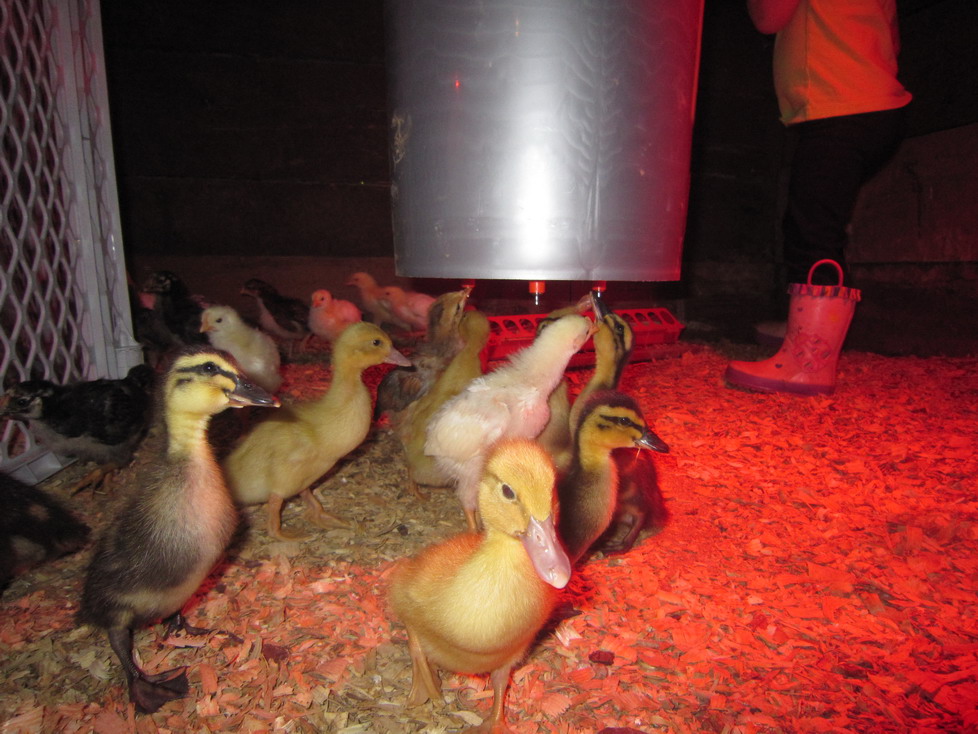
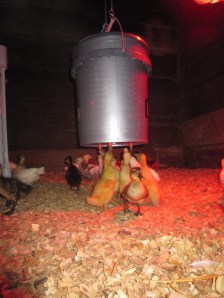
Here are photos of the drinker in the chick nursery:

Chicks and ducklings drinking from hanging waterer

Another picture showing the handle

They are still using this waterer exclusively, however, when the rain fills their little pond up they prefer to drink out if that.  Even though they have been trained to use this bucket drinker, drinking out of a trough (or puddles) is more natural to them.

A New Season … More Stink Bugs

More and more people are meeting one of our most recent invasive pests, the Brown Marmorated Stink Bug (BMSB).  It had spread to at least 29 states since it was introduced in a shipment to eastern PA sometime during the 1990s.  They were first collected in Allentown, PA, in 1998.

BMSBs are a major agricultural pest in Asia, feeding on fruit crops and their population in the US has reached numbers to make it a real problem to American orchardists, too.  They don’t eat entire fruits or even make them inedible.  They disfigure hundreds of individual fruits – like apples – so that they cannot be marketed for fresh fruit sale.  Instead these apples and other fruits can only be used for cider or juice. 

Adult BMSB
Now that spring has arrived (in most of the country, anyway) we will be seeing more adult stink bugs waking up from hibernation in our homes.  Our family flushes all that we find so they don’t stink up our vacuum cleaner!  I have been wondering, lately, if they could be used for anything else…say a food source for something.  I happened upon a forum today with some interesting ideas for “disposing” of BMSBs.  Here’s the link: http://forums.gardenweb.com/forums/load/pagard/msg101628188305.html; the discussion thread is called “Fun Organic way to Deal with Pesky Brown Stink Bugs.”  I particularly like that one person’s pet turtle loves them!  I’m considering catching some in a jar, freezing them and feeding them to our chickens.  I’ll let you know if they eat them!

In addition to waking up from hibernation, BMSBs will also be reproducing soon.  Here’s a photo from the Penn State Cooperative Extension, York County of stink bug eggs and the hatched larvae:

BMSB eggs and larvae
The Penn State department of Entomology describes the eggs as, “elliptical (1.6 x 1.3 mm), light yellow to yellow-red with minute spines forming fine lines. They are attached, side-by-side, to the underside of leaves in masses of 20 to 30 eggs.” The adults reproduce from May to August and produce one generation per year in Pennsylvania , depending on the temperatures. Here is an image of BMSB nymphs

BMSB Nymphs

If we educate ourselves to the different stage of the BMSB, we can work at reducing their numbers – from egg stage to adult!

A Belated Happy St. Patty’s Day

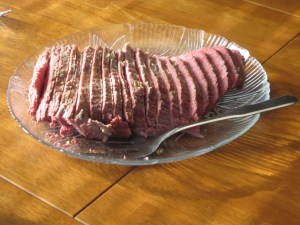
We didn’t have corned beef and cabbage at our home…. we had corned beef and roasted potatoes, and other veggies.  This year I got a Nathan’s brand corned beef from our local market and it turned out great! 

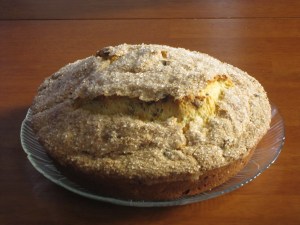
We also had the best Irish soda bread.  I got the recipe from a dear friend several years ago and make it every year. 

Here’s the recipe:

4 cups                    flour

1 cup                      sugar

1 tsp                       baking soda

3 tsp                       baking powder

1 tsp                       salt

2 cups                    buttermilk or regular milk

1 cup                      raisins (rinsed so they don’t stick together)

1                              egg  (beaten)

Mix all ingredients together.  Pour in a cast iron skillet (grease and flour well).  Sprinkle ¼ cup sugar on top.  Bake at 350° for 1 hour.  Let cool 1 hour in pan.  Remove and cool completely.

The Shepherd’s Lament

Someone shared this on one of my Yahoo groups.  It’s cute and I thought I’d share it, too.

by Dr. Darrell Salsbury, DVM

Now I lay me down to sleep
Exhausted by those doggone sheep;

My only wish is that I might
Cause them not to lamb at night;

I wouldn’t mind the occasional ewe,
But lately it’s more than just a few:

Back into bed, then up again,
At two o’clock and four a.m.

They grunt and groan with noses high,
And in between a mournful sigh,

We stand there watching nature work,
Hoping there won’t be a quirk:

A leg turned back, or even worse,
A lamb that’s coming in reverse.

But once they’ve lambed we’re glad to see
That their efforts didn’t end in in tragedy.

There’s no emotion so sublime
As a ewe and lamb that’s doing fine.

I’m often asked why I raise sheep,
With all the work and loss of sleep;

The gratification gained at three a.m.
From the birth of another baby lamb–

How can you explain, or even show?
‘Cause only a shepherd will ever know!

Happy Fastnacht Day!!

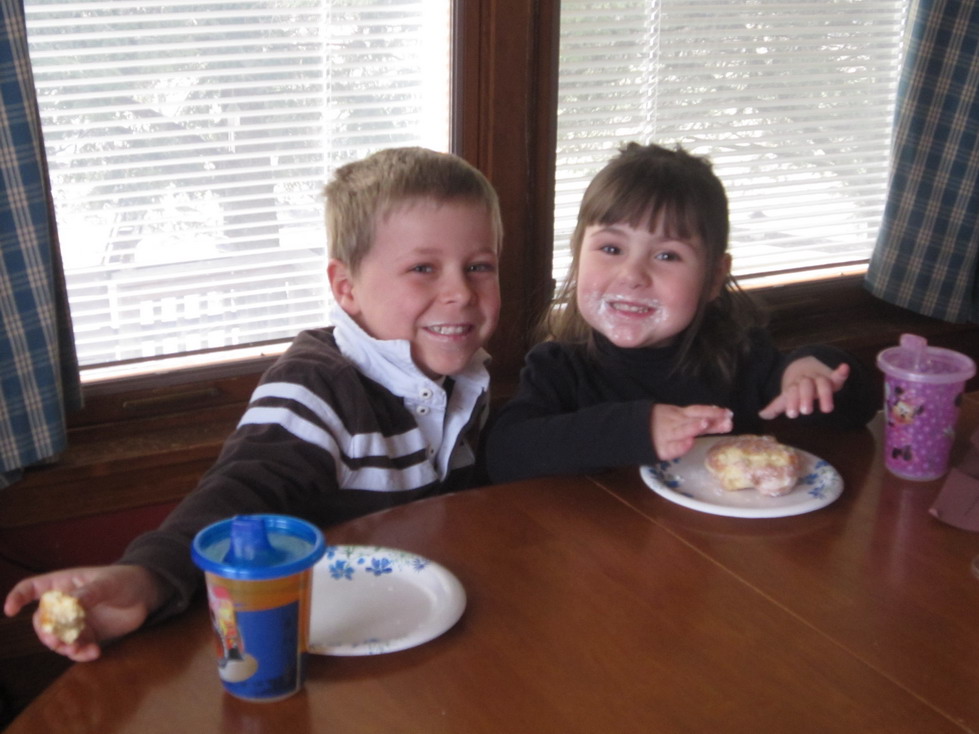
Today is more commonly called Mardi Gras, Fat Tuesday or Shrove Tuesday, but here in Berks county, PA we are in the heart of Pennsylvania Dutch country!  Fastnacht (also spelled fasnacht or faschnacht) are a doughy potato pastry, similar to a doughnut, and fried in lard.  In the past people spread honey on them but, today, you most commonly find them glazed or coated in confectioners’ sugar.Mardi Gras has been a traditional day of feasting since the Middle Ages.  All the feasting would use up extra food in the home pantry that would be a temptation during the  40 days of Lenten fasting.  Lent is the period of 40 days prior to Easter and fasting during this time began as a Catholic custom, but is also celebrated by many Protestants.

Historically, fastnacht dough was set out to rise on the Monday before Ash Wednesday.  It was then cut into squares and fried in lard for Tuesday morning breakfast.  Everyone would eat all the fastnachts they wanted with their coffee or other morning  beverage.

fasnachts

Fastnachts & Coffee

I wish you all a happy Fastnacht Day!  If you can’t find fastnacht where you live, here’s a recipe I found at www.maplespringsfarm.com.  This farm is in Bradford County, PA and the family is of German and PA Dutch heritage.  (The recipe make 100 fastnachts – you might want to reduce it!)

Ingredients2 cups mashed potatoes
1 cup granulated sugar
½ cup shortening and ½ cup butter
1 quart milk – scalded and cooled
5 cups flour
3 packages yeast in 1 cup warm water (dissolve yeast in water + 1 tea sugar)2 eggs
1 tea salt
Rest of 5 pound bag of flour  

DirectionsMix first six ingredients in order with electric mixer. Let rise until double, approx. four hours at room temperature.Stir remaining 3 ingredients into previous batter. Let rise till double (approx. 5 hours). Roll and cut. Let rise again till double (2 – 3 hours).Fry in lard at 425. Makes 100.

Happy Fastnacht Day!!

Her Name was Lola….

She was a bunny

With pointy ears upon her head and soft brown and white fur

She would binky and race around

And she knew she was a queen, even Beau was in her dreams

In cages side by side, they slept from 8 to 5

They were young and they had each other

Who could ask for more?

At the Day home, in the living room

The coolest spot west of Pottstown

At the Day home, in the living room

Grooming and sleeping were always their thing 

At the Day home … they fell in love.

They were happy, always together

Always lying next to her, Beau would always dote on her

And when she wanted, they would cuddle

One day Beau was too old, and it was time for him to go

He breathed his last breath, quietly in his sleep

His cage was packed away

Beau had left her side

At the Day home, in the living room

The coolest spot west of Pottstown

At the Day home, in the living room

Grooming and sleeping were always their thing

At the Day home … she lost her love.

Her name was Lola, she was a bunny 

They lived there happily for almost 6 years

Then she was sad, and oh, she missed him

Her health began to go downhill, and she became half-blind

She circles endlessly, please Lord let her rest

She lost her youth and she lost her Beau

Now she’s lost her health

At the Day home, in the living room

The coolest spot west of Pottstown

At the Day home, in the living room

Grooming and sleeping were always their thing

At the Day home …

Beau & Lola

__________________________________

I’ve always hummed Copacabana whenever I think of Lola so I thought writing this was fitting.  We lost her a couple weeks ago – I took her to be euthanized on February 21st.  She was the 1st pet I had to do this for and it was difficult.  My eyes welled up with tears while I filled out the necessary form, and I had trouble signing my name to it. 

Hannah was with me at the veterinary office but Noah was, thankfully, at school to make up a snow day.  I held Lola in my arms until it was time for the vet to give her “the” injection.  While we were waiting 2 teenage girls who were there with their mother (and their cat) played with Hannah.  Even this day, God showed that He was with us by sending those girls to keep Hannah happy and occupied.

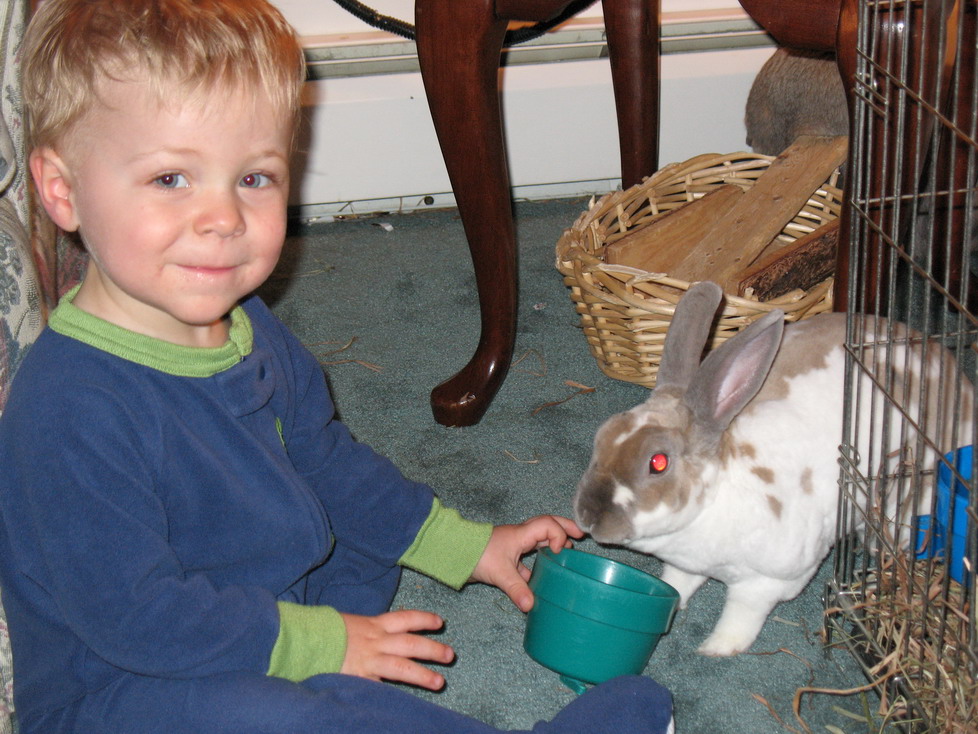
Noah feeding Lola

Right Now?!

I’m sure I’m not the only one who thinks everything always happens at once.  Does the phrase, “Never a dull moment” describe anyone elses’ life perfectly?

Today I had an appointment with the state veterinarian at 11 am to complete our annual inspection for the USDA Scrapie Eradication Program.  Hannah and I had been outside feeding the critters earlier and then came in for a break for a while.  We bundled up (it was 20 degrees colder today than it was yesterday!) and ventured back outside at 10:30.  While I brought fresh swimming water to the ducks I saw the vet’s SUV coming up the drive.  OK… I had wanted to get the ewes into the barn before he got here … luckily he had some paperwork to finish so I had time to persuade my girls to come to the barn.

I got as far as the gate when I heard it.  Little, tiny, adorable lambie baa’s.  I was expecting our ewes, Beatrice and Camille, to lamb at any time but I had let them out of the barn for some exercise and fresh grass.  Beatrice was on the other side of my garden with 2 still wet lambs!  One was standing; the other hadn’t been cleaned off yet.  I quickly fetched 2 towels, helped dry off the 2nd lamb and brought mama and babies into the barn.  Once I had them together in a lambing jug (or pen), I went to gather the other ewes into the barn.

Our inspection went well and once I had made Hannah lunch I went to check on Beatrice and her twins.  The ewe lamb weighed 9.5 lbs and the ram lamb weighed 8.75 lbs.  I made sure the both knew where to nurse and headed back to Hannah in the house.